

No hay productos en el carrito
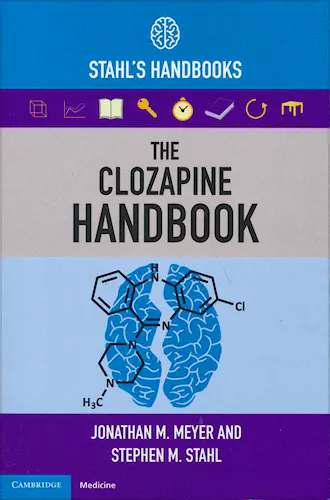
The Clozapine Handbook (Stahl's Handbooks)
Meyer, J. — Stahl, S.
1ª Edición Julio 2019
Inglés
Tapa blanda
318 pags
358 gr
13 x 19 x 2 cm
ISBN 9781108447461
Editorial CAMBRIDGE
LIBRO IMPRESO

-5%
56,47 €53,65 €IVA incluido
54,30 €51,59 €IVA no incluido
Recíbelo en un plazo de
2 - 3 semanas
LIBRO ELECTRÓNICO
-5%
50,97 €48,42 €IVA incluido
49,01 €46,56 €IVA no incluido
Acceso On Line
Inmediato
Preface
1. Initiating Clozapine
2. Understanding hematologic monitoring and benign ethnic neutropenia
3. Binding profile, metabolism, kinetics, drug interactions and use of plasma levels
4. Managing constipation
5. Managing sialorrhea
6. Managing sedation, orthostasis and tachycardia
7. Managing metabolic adverse effects
8. Managing seizure risk and stuttering
9. Fever, myocarditis, interstitial nephritis, DRESS, serositis and cardiomyopathy
10. Eosinophilia, leukocytosis, thrombocytopenia, thrombocytosis, anemia, hepatic function abnormalities
11. Managing enuresis and incontinence, priapism, venous thromboembolism, neuroleptic malignant syndrome, tardive dyskinesia and obsessive compulsive disorder
12. The efficacy story: treatment resistant schizophrenia, psychogenic polydipsia, treatment intolerant schizophrenia, suicidality, violence, mania and Parkinson's disease psychosis
13. Addressing clozapine positive symptom nonresponse in schizophrenia spectrum patients
14. Discontinuing clozapine and management of cholinergic rebound
15. Special topics: child and adolescent patients, elderly patients, patients with intellectual disability, pregnancy and risk for major congenital malformation, lactation, overdose, postmortem redistribution
Index.
Real-world and clinical trial data support that clozapine is the only effective antipsychotic for treatment resistant schizophrenia and other severe mental illnesses. Clozapine also reduces rates of suicidality, psychiatric hospitalization and all-cause mortality. However, clozapine is underutilized for two reasons: misunderstandings of its efficacy benefits and misapprehension of, limited knowledge or misinformation about the management of treatment related risks and adverse effects. In response to worldwide efforts to promote clozapine use, this user-friendly Handbook provides clinicians with evidence-based approaches for patient management, as well as logical approaches to the management of clinical situations and adverse effects. It outlines clearly the rationale for specific management decisions and prioritises the options based on this logic. This Handbook is designed for use by clinicians worldwide and is essential reading for all mental health care professionals.
- The increased interest in promoting greater clozapine use internationally means this book fills a gap in the market for clinicians who seek evidence-based advice on best practices
- Use of clozapine has shown real world benefits such as a reduction in suicidality, psychiatric hospitalization and mortality rates; many clinicians are unfamiliar with recent improvements in the understanding of clozapine-related dosing and adverse effect management
- Provides a logical, evidence-based framework for important clinical issues, leading the clinician through the reasoning process for adverse effect management and other common clinical situations
Jonathan M. Meyer, University of California, San Diego
Jonathan M. Meyer is currently a Clinical Professor of Psychiatry at the University of California, San Diego and a Psychopharmacology Consultant to the California Department of State Hospitals. Dr Meyer is an internationally recognised speaker on psychopharmacology and the treatment of severe mental illness, and is Distinguished Fellow of the American Psychiatric Association.
Stephen M. Stahl, University of California, San Diego
Stephen M. Stahl is currently a Professor at the University of California, San Diego and serves as Honorary Fellow in the psychiatry department at the University of Cambridge. He is also the Chairman of the Neuroscience Education Institute (NEI) and Arbor Scientia Group. Dr Stahl serves as the Director of Psychopharmacology Services at the California Department of State Hospitals as well as the Editor-in Chief of CNS Spectrums.

© 2026 Axón Librería S.L.
2.149.0