

There are no products in the cart.
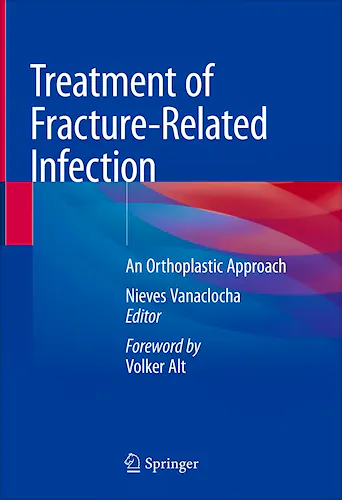
Treatment of Fracture-Related Infection. An Orthoplastic Approach
Vanaclocha, N.
1ª Edition September 2025
English
Hard Cover
169 pags
600 gr
18 x 26 x 1 cm
ISBN 9783031924514
Publisher SPRINGER
Printed Book

-5%
145,59 €138,31 €VAT included
139,99 €132,99 €VAT not included
Receive it within
2 - 3 weeks
Electronic Book
-5%
135,19 €128,43 €VAT included
129,99 €123,49 €VAT not included
OnLine Access
Immediate
• Comprehensive review of all options to support complex decision-making in fracture-related infection
• In-depth evaluation of indications of the different techniques, e.g. bone regeneration vs. bone replacement
• Includes 11 clinical cases, amply discussed, and videos for maximal practical applicability
About this book
Fracture-related infection is amongst the most challenging and complex conditions that physicians face all over the world. Treatment is complex and interdisciplinary, with scarce, low-quality evidence to aid decision-making. Successful management of fracture-related infection requires not only the combination of meticulous surgical treatment and pathogen-directed antimicrobial therapy, but also an in-depth understanding of the pathophysiology (including the role of biofilm), diagnostic methods, and the nuances of the advanced surgical techniques required.
This book breaks down the decision-making involved in selecting and effectively performing a treatment strategy in patients with a fracture-related infection, with a keen focus on clinical relevance and applicability. Each chapter has been co-written by authors with different training (often, an orthopaedic and a plastic surgeon), as well as years of expertise in this evolving field, who present the decision-making process in an accessible way that can be immediately integrated into the physician’s practice.
Options for treatment are discussed based on each clinical scenario (state of the fracture, patient condition, and status of the soft tissue envelope), including indications of implant retention strategies (DAIR), amputation, options when the joint is unsalvageable (endoprosthetic replacement, arthrodesis, resection arthroplasty) or management of infected bone defects (acute shortening with or without re-lengthening, bone transport, bone grafts, bone flaps), with illustrative clinical cases at the end of the chapter. The workings and indications of the latest innovations, including molecular diagnostics, nuclear imaging, strategies to overcome resistant microorganisms, implants with antimicrobial surface modifications and compressive osseointegration, are discussed as well.
Through multidisciplinary insights and actionable, practical strategies, this book equips readers with the knowledge needed to reduce infection rates, improve patient recovery, and ultimately deliver superior care. Orthopaedic and trauma surgeons, plastic surgeons, infectious disease specialists, and other components of teams dealing with bone infections associated to fractures will find this book of great value to enhancing patient outcomes, and a direct benefit to their practice.

© 2026 Axón Librería S.L.
2.150.1